Tanger-Tétouan-Al Hoceïma, Morocco
Chefchaouen Travel Guide
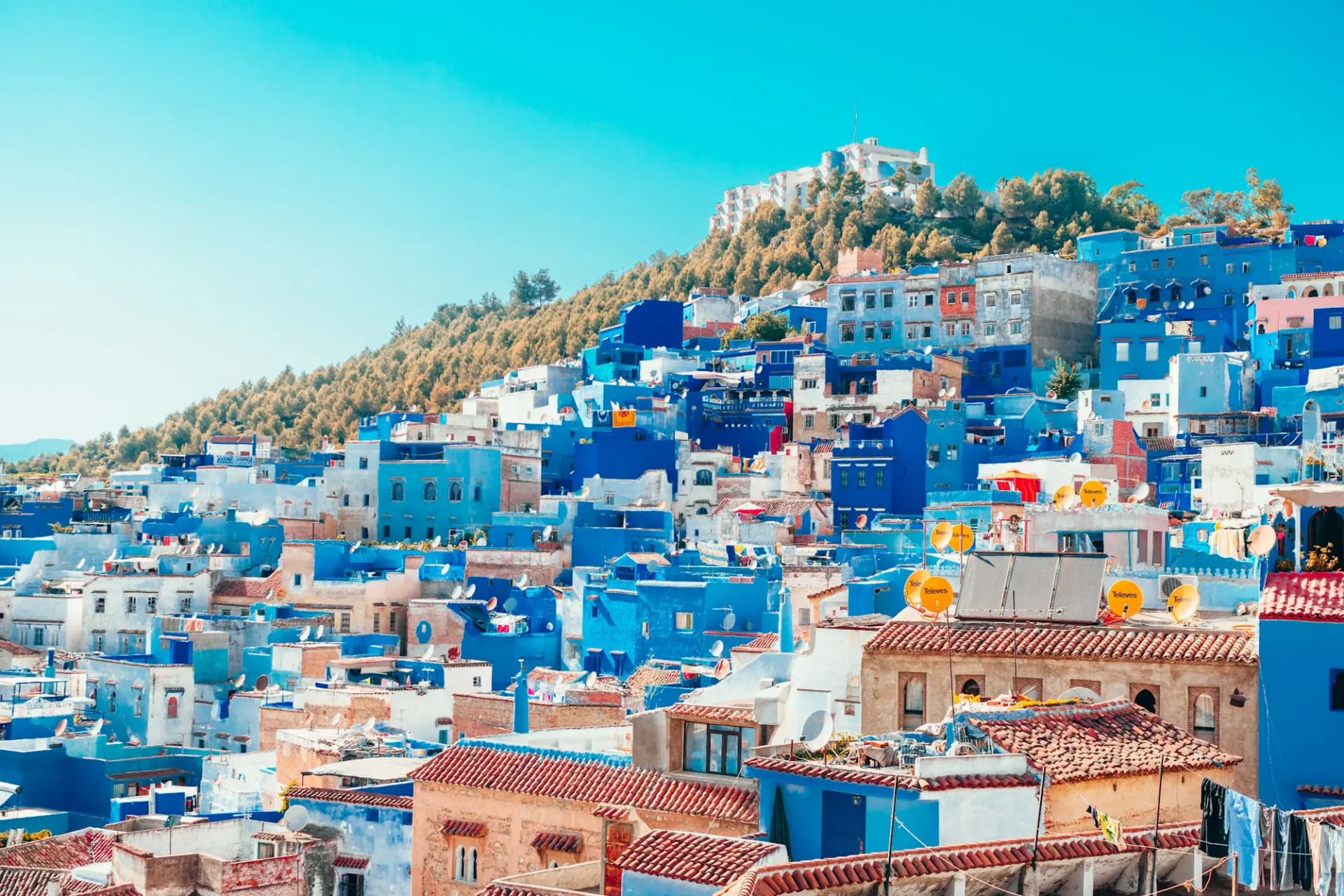
Chefchaouen sits on the slopes of the Rif mountains in northern Morocco. Founded in the late 15th century, its medina is famous for walls, doors and stairways washed in shades of blue, which have made it one of the most photographed towns in the country.
Updated September 15, 2026Winds of Morocco Editorial Team
Quick answer
How do I get to Chefchaouen?
Chefchaouen has no airport or railway station, so you arrive by road. The easiest route is from Tangier, around two and a half hours by CTM coach; from Fes the coach takes about five hours. Private transfers and grand taxis are faster and more flexible. Stay at least one night so you can see the blue medina early in the morning before day-trip crowds arrive.
Beyond the photographs, it is a small, relaxed place with a mountain setting, cool evenings, local goat cheese and easy access to hiking trails in the surrounding national park. It rewards a slower rhythm rather than a rushed stop.
Why visit Chefchaouen
The blue medina
Wandering the tiled stairways and painted alleys is the main attraction, and the town is small enough to explore without a guide.
Mountain scenery
The Rif rises directly behind the town. Viewpoints and short hikes start at the edge of the medina.
A slower pace
After Fes or Tangier, Chefchaouen feels calm, especially in the early morning and evening.
Hiking nearby
Talassemtane National Park and the Akchour waterfalls offer some of northern Morocco's most accessible walking.
Best time to visit
Spring is the most beautiful season, with green hillsides and flowing streams. Autumn is also pleasant and quieter.
Summer is warm but milder than the interior plains. The town gets busy with domestic and international visitors, so book ahead.
Winter is cold and can be rainy, with snow on the higher peaks. Many guesthouses are modest, so check for heating.
Where to stay in Chefchaouen
Accommodation in Chefchaouen is mostly guesthouses and small riad-style hotels. Expect character rather than large facilities.
Best areas
- 01
Inside the medina
Best for: Atmosphere, early-morning walks
Staying in the medina lets you enjoy the blue streets before and after day visitors. The town is hilly and many lanes are stepped, so expect to carry luggage up stairs.
- 02
Upper medina near Ras el-Maa
Best for: Views, access to trails
Guesthouses on the upper slopes are close to the spring and the path to the Spanish Mosque viewpoint, with quieter streets.
- 03
Just outside the walls
Best for: Drivers, hotels with parking
Hotels along the roads outside the medina offer parking, larger rooms and sometimes pools, a few minutes' walk from Outa el-Hammam square.
Types of accommodation
Riads
Traditional houses converted into guesthouses, often with painted interiors and roof terraces overlooking the valley.
Hotels
Small hotels outside the medina walls suit travelers with cars and those who want to avoid stairs.
Lodges & guesthouses
Rural lodges and guesthouses in the surrounding villages make good bases for hiking in the Rif.
Things to do in Chefchaouen
Culture
Explore the blue lanes early
Sunrise and the first hours of the morning are the quietest time for walking and photography. Be respectful: these are residential streets, and some residents do not want their doors photographed.
Culture
Outa el-Hammam and the kasbah
The main square is lined with cafés and overlooks the red-walled kasbah, which has a garden and a small museum, next to the Grand Mosque.
Outdoors
Ras el-Maa spring
At the northeastern edge of the medina, the spring and small waterfall are a local gathering point where you can still see people washing clothes.
Outdoors
Sunset at the Spanish Mosque
A walk of around 30 minutes from Ras el-Maa leads up to a small whitewashed mosque built in the 1920s, with the best panoramic view over the town.
Excursion
Akchour waterfalls
A popular day hike in Talassemtane National Park with river pools and a natural rock arch known as God's Bridge. Go with a local guide or arrange transport to the trailhead.
Food
Local goat cheese
Fresh goat cheese from the Rif appears in salads and at breakfast. Try it with local bread and honey.
Day trips and nearby
Talassemtane National Park
Cedar and fir forests, gorges and villages. Longer treks require a guide and good footwear.
Tetouan
The UNESCO-listed medina of Tetouan, with strong Andalusian influences, is about an hour and a half away by road and sees far fewer tourists.
Getting there
From Tangier
CTM runs several daily coaches between Tangier and Chefchaouen, with journeys typically around two hours fifteen to two and a half hours. Private transfers take a similar time with door-to-door convenience.
From Fes
Coaches take around five hours on winding roads. A private driver is faster and allows stops, but it is still a long day.
By car
Roads through the Rif are scenic but winding. Park outside the medina: vehicle access inside is very limited.
Getting around
- Everything in the medina is on foot, with steps and slopes. Comfortable shoes are essential.
- Petits taxis wait near the medina gates and the coach station, which is a short ride below the town.
Food and shopping
What to eat
Rif goat cheese, bissara soup, grilled meats and tagines. Restaurants cluster around Outa el-Hammam.
What to buy
Woven blankets and wool garments from the region, natural pigments and small crafts. Prices tend to be lower than in Marrakech.
Practical tips
Decline offers of hashish
The wider Rif region is associated with cannabis cultivation, and visitors may be approached. Recreational use and purchase remain illegal in Morocco; a clear refusal is enough.
Cash
There are ATMs in town, but smaller guesthouses and cafés often prefer cash.
Frequently asked questions
Is one day enough in Chefchaouen?
One day covers the medina, the kasbah and the Spanish Mosque viewpoint, but staying overnight lets you see the town in the quiet early morning. Add a second night if you want to hike to the Akchour waterfalls.
Why is Chefchaouen painted blue?
There is no single confirmed explanation. Commonly cited reasons include traditions linked to the Jewish community that settled in the town, symbolism of the sky and heaven, and practical claims about keeping houses cool. The tradition is now maintained by residents and the town.
Is it better to reach Chefchaouen from Tangier or Fes?
Tangier is closer, at around two and a half hours by coach, and works well if you arrive by ferry or flight into northern Morocco. Fes is about five hours away and makes sense if you are already touring the imperial cities.
Sources
- Medina of Tétouan (formerly known as Titawin) · UNESCO World Heritage Centre
- CTM coach network · CTM
- Visit Morocco · Moroccan National Tourist Office
Related guides

Trip planning
The Best Time to Visit Morocco
Spring and autumn suit most itineraries, but the right season depends on where you go: the desert, the Atlas, the Atlantic coast or the imperial cities.