Rabat-Salé-Kénitra, Morocco
Rabat Travel Guide
Rabat is the political capital of Morocco and the seat of the royal palace, parliament and ministries. In 2012 UNESCO inscribed 'Rabat, Modern Capital and Historic City' as a World Heritage Site, recognizing both its historic monuments and the planned 20th-century city.
Updated September 15, 2026Winds of Morocco Editorial Team
Quick answer
Is Rabat worth visiting?
Yes. Morocco's capital is calmer and greener than Casablanca or Marrakech, with the Kasbah of the Udayas above the ocean, the Hassan Tower and Mausoleum of Mohammed V, the Roman and Marinid ruins of Chellah and a medina with little hassle. The city is a UNESCO World Heritage Site and sits on the Al Boraq high-speed line. One to two days is ideal.
For travelers it is one of the most pleasant cities in the country: walkable, clean, with gardens, an ocean-facing kasbah and a modern tramway. It is often overlooked, which is precisely why it feels relaxed.
Why visit Rabat
Monuments without the crowds
Rabat's major sites are impressive yet rarely overwhelmed by tour groups.
Ocean and river views
The Kasbah of the Udayas overlooks the mouth of the Bou Regreg river, the Atlantic and the city of Salé opposite.
An easy medina
Rabat's medina is compact, grid-like in parts and relatively low-pressure for shoppers.
Modern culture
Museums and contemporary architecture reflect the city's role as the national capital.
Best time to visit
Rabat's Atlantic climate is mild. Spring and autumn are ideal; summer is warm but tempered by ocean breezes.
Winter is cool and can be wet, but sightseeing remains comfortable.
Where to stay in Rabat
Rabat has fewer tourist-oriented hotels than Marrakech, but a good mix of medina guesthouses and business and upscale hotels.
Best areas
- 01
Medina and Udayas
Best for: Guesthouses, atmosphere, walking
Riads in the medina and near the kasbah put you close to the ocean and the old city, with car access at the edges.
- 02
Hassan and city center
Best for: Hotels, sightseeing, tram
Central districts are near Hassan Tower, Rabat Ville station and the tramway, convenient for short stays.
- 03
Agdal
Best for: Cafés, Al Boraq station, business travel
A lively residential district with restaurants and Rabat Agdal station, where high-speed trains stop.
- 04
Souissi
Best for: Quiet, upscale hotels, green space
A leafy area of embassies and residences with a few upscale hotels, best if you have a car or use taxis.
Types of accommodation
Riads
A small number of restored riads in the medina offer a traditional stay close to the Kasbah of the Udayas.
Hotels
Hotels in the center, Agdal and along the river cater to business and leisure travelers alike.
Apartments
Apartments in Agdal and Hassan suit longer stays, with good access to the tram and trains.
Things to do in Rabat
Culture
Kasbah of the Udayas
Walk through the monumental gate, wander the blue-and-white lanes, rest in the Andalusian garden and look out over the river mouth and the ocean.
Culture
Hassan Tower and Mausoleum of Mohammed V
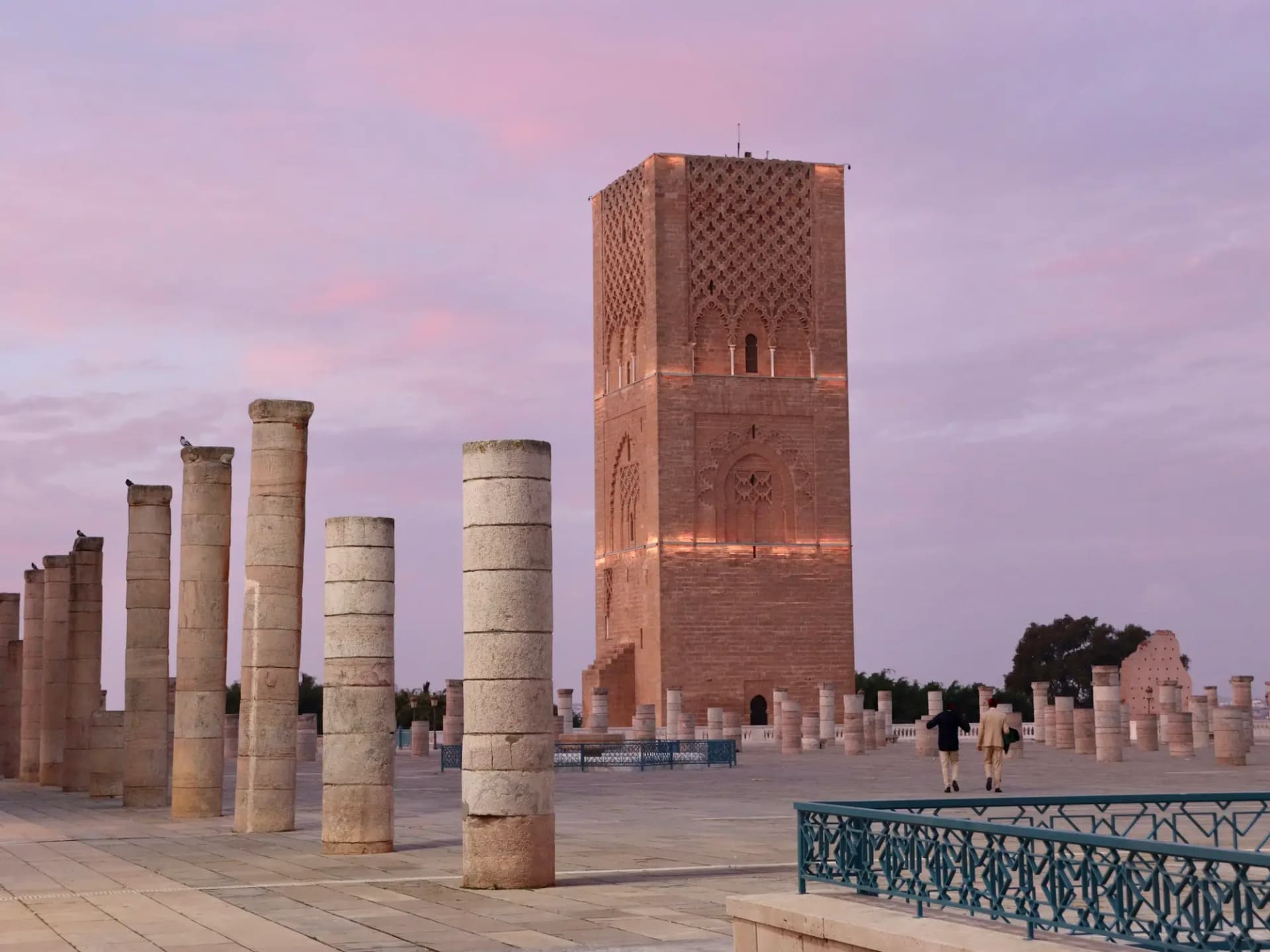
The unfinished 12th-century minaret stands among rows of columns on a vast esplanade, opposite the mausoleum guarded by ceremonial royal guards.
Culture
Chellah
A walled necropolis combining Roman ruins and a Marinid-era complex, set among gardens and known for the storks nesting on its structures.
Culture
Mohammed VI Museum of Modern and Contemporary Art
The country's major museum of modern and contemporary art, with rotating exhibitions.
Shopping
The medina and Rue des Consuls
A calm place to browse rugs, leather and crafts, with less pressure than in larger tourist cities.
Day trips and nearby
Salé
Rabat's historic neighbor across the river, reachable by tram or a short boat crossing, with an old medina and madrasa.
Casablanca
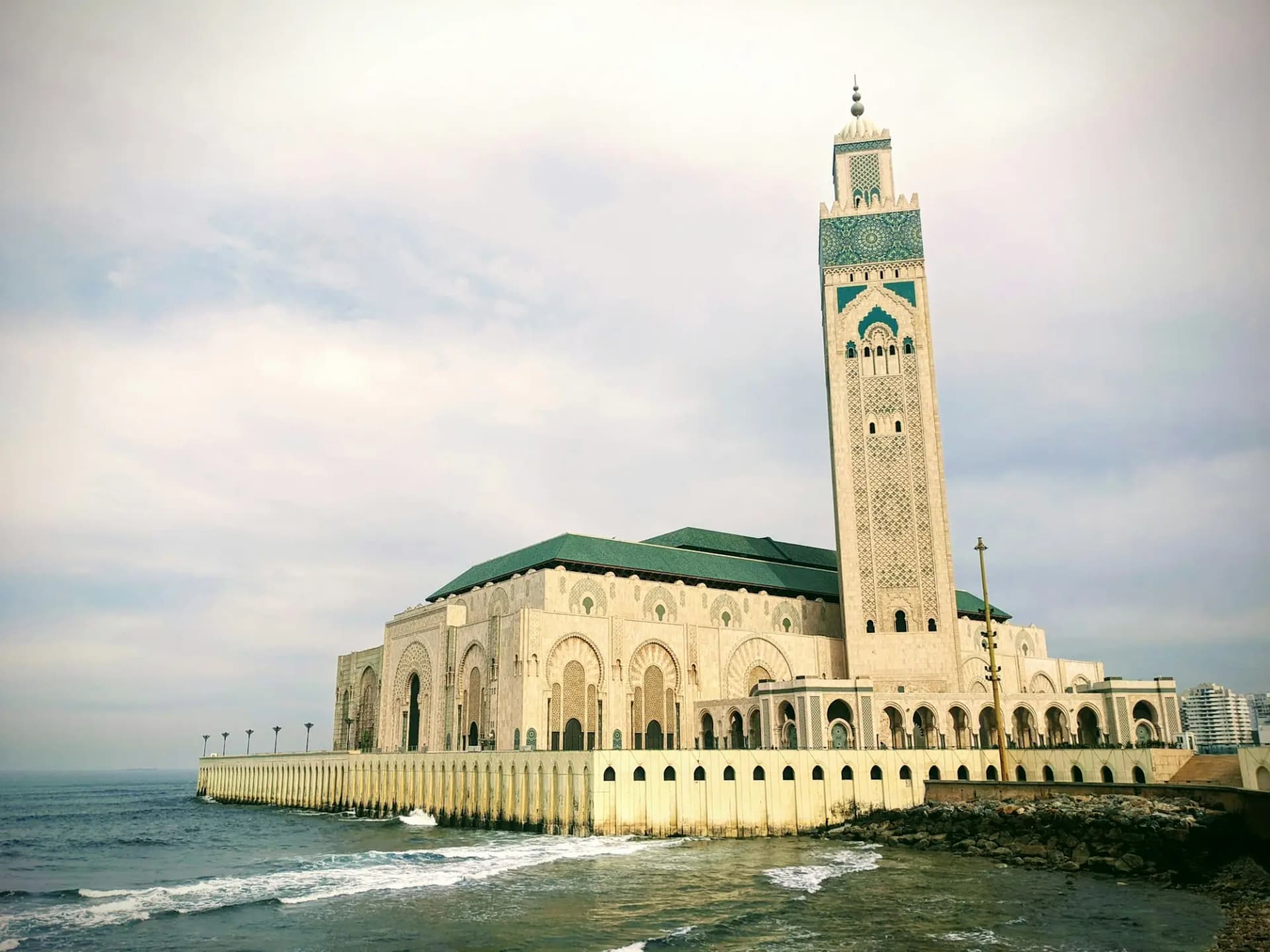
Frequent trains make a day visit to the Hassan II Mosque straightforward.
Getting there
By train
Rabat has two main stations, Rabat Ville in the center and Rabat Agdal. Al Boraq trains reach Tangier in about one hour twenty, and there are frequent services to Casablanca and connections to Fes and Marrakech.
By air
Rabat–Salé Airport handles a smaller number of international routes. Many visitors fly into Casablanca and continue by train.
Getting around
- The Rabat–Salé tramway connects the center, Agdal, the medina edge and Salé.
- Blue petits taxis are inexpensive for short trips. Most central sights are walkable.
Food and shopping
What to eat
Seafood by the river and ocean, and classic Moroccan dishes in medina restaurants. Agdal has a wide choice of cafés.
What to buy
Rabat carpets, embroidery and leather goods in the medina.
Practical tips
Official buildings
Photography near the royal palace and some government buildings may be restricted. Follow guards' instructions.
Dress
Modest clothing is appropriate at the Mausoleum of Mohammed V.
Frequently asked questions
Rabat or Casablanca: which is better for tourists?
Rabat is generally more pleasant for sightseeing, with more historic monuments, a calmer medina and walkable streets. Casablanca has the Hassan II Mosque and more nightlife. With rail links taking about an hour between them, many travelers visit both.
How many days do you need in Rabat?
One full day covers the Kasbah of the Udayas, Hassan Tower, the mausoleum and Chellah. A second day allows time for museums, Salé and the coast.
Sources
- Rabat, Modern Capital and Historic City: a Shared Heritage · UNESCO World Heritage Centre
- Al Boraq and train timetables · ONCF (Moroccan National Railways)
Related guides

Travel notes
Al Boraq: How Morocco's High-Speed Train Changed Travel in the North
Since 2018, Africa's first high-speed rail line has linked Tangier with Rabat and Casablanca. Here is what it means for planning a trip.