Fès-Meknès, Morocco
Fes Travel Guide
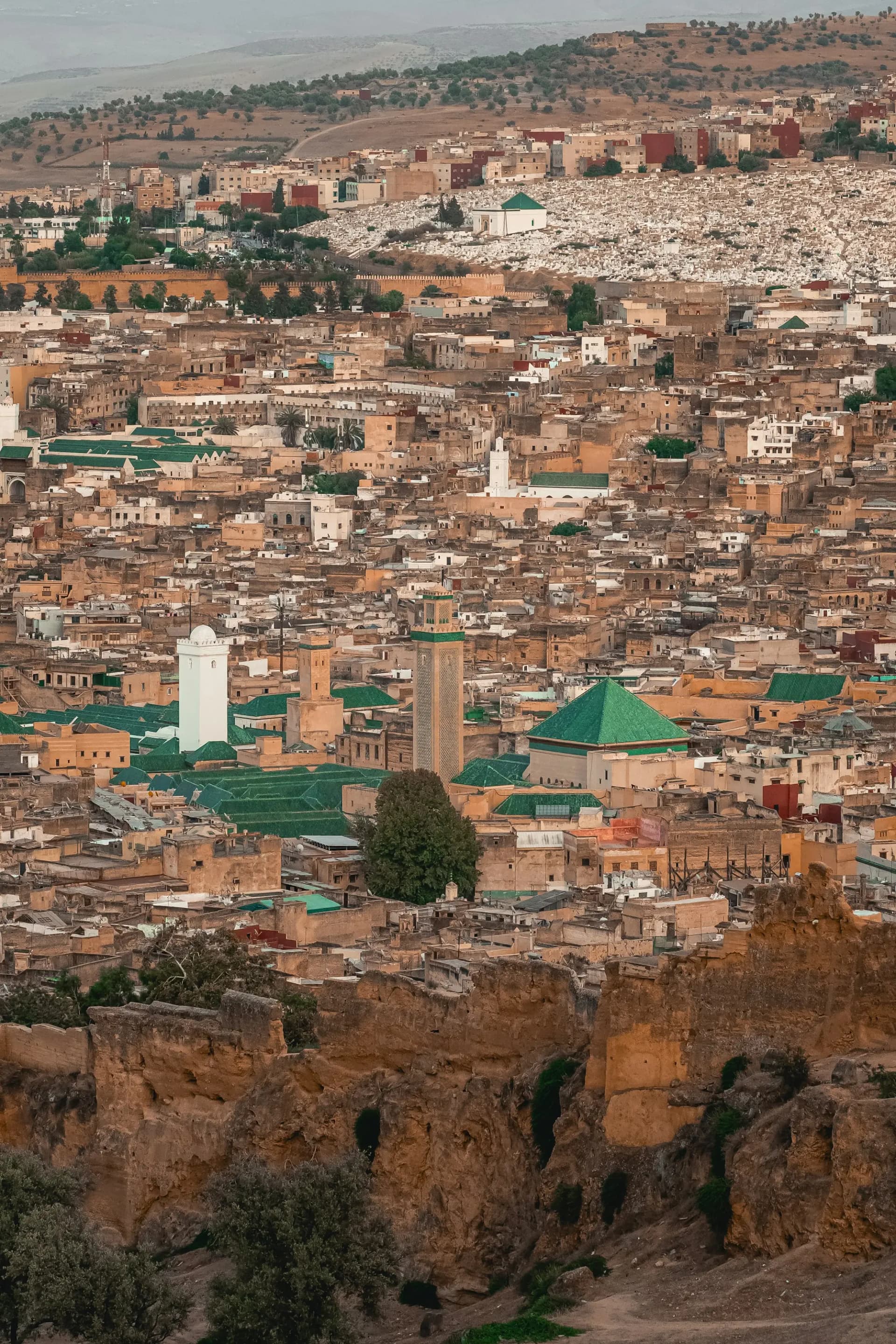
Fes is Morocco's great medieval city. Its old medina, Fes el-Bali, was inscribed as a UNESCO World Heritage Site in 1981 and remains a working city of artisans, schools, mosques and markets, threaded by thousands of lanes that are largely closed to cars.
Updated September 15, 2026Winds of Morocco Editorial Team
Quick answer
How many days do you need in Fes?
Plan two full days in Fes: one guided day to understand the layout of Fes el-Bali, its madrasas, souks and the Chouara tannery, and a second day to revisit favorite quarters on your own or see Fes el-Jdid. Add a third day for a trip to Meknes and the Roman ruins of Volubilis. Stay in a riad near a medina gate such as Bab Bou Jeloud for the easiest access.
It is also home to al-Qarawiyyin, founded in the 9th century by Fatima al-Fihri and often cited as one of the oldest continuously operating educational institutions in the world. Fes rewards patience: it can feel overwhelming at first, then becomes one of the most memorable places in the country.
Why visit Fes
The medina at full scale
Fes el-Bali is dense, historic and still inhabited. Mules carry goods through lanes too narrow for vehicles, and entire streets are dedicated to single crafts.
Madrasas of rare detail
The Bou Inania and al-Attarine madrasas show Marinid-era carved cedar, stucco and tilework at an extraordinary level of craftsmanship.
Craft traditions
Tanneries, metalworkers, weavers and ceramicists still work in the medina, and Fes remains a center for leather and blue-and-white pottery.
A gateway to the north and the Middle Atlas
Meknes, Volubilis, the cedar forests around Ifrane and the road to Chefchaouen are all within reach.
Best time to visit
Spring and autumn are the most comfortable seasons, with mild temperatures for long days on foot.
Summer in Fes is hot, and the medina's covered lanes only partly help. Start early and rest in the afternoon.
Winters are cool and can be wet, and riads without heating feel cold at night. Ask about heating before booking.
Where to stay in Fes
Fes has a large choice of restored riads and dar guesthouses, many run by families. Location relative to a medina gate matters more than star ratings.
Best areas
- 01
Fes el-Bali (near Bab Bou Jeloud)
Best for: First-time visitors, riads, easy orientation
Staying close to the Blue Gate puts you near a taxi drop-off and at the top of the two main thoroughfares, Talaa Kebira and Talaa Seghira. You can walk into the medina and still find your way back.
- 02
Deeper in Fes el-Bali
Best for: Atmosphere, restored riads, repeat visitors
Riads near the Andalusian quarter or the tanneries feel immersive but require more walking with luggage. Choose one that offers to meet you at a gate on arrival.
- 03
Batha and Ziat
Best for: Balance between access and atmosphere
The edge of the medina around Batha has guesthouses close to both the old city and a road, which makes transfers straightforward.
- 04
Ville Nouvelle
Best for: Hotels with pools, parking, business travel
The modern city has larger hotels, wide avenues and the railway station. It is convenient for drivers and for families who want space, with taxis to the medina.
Types of accommodation
Riads
Many riads in Fes occupy grand merchant houses with tall courtyards and panoramic roof terraces. Ask how many minutes' walk from a car access point and whether staff can collect you.
Hotels
Palace hotels on the medina's edge and modern hotels in the Ville Nouvelle suit travelers who prefer pools, step-free access and on-site parking.
Villas
A smaller number of villas and country guesthouses sit in the hills and countryside around the city, useful for groups traveling by car.
Things to do in Fes
Guided tour
A licensed guide on day one
Fes el-Bali is complex. A half-day or full-day walk with an officially licensed guide, booked through your accommodation, explains the layout, history and crafts, and you will navigate far better afterwards.
Culture
Bou Inania and al-Attarine madrasas
Former Qur'anic schools open to visitors, with some of the finest decorative carving in Morocco. Al-Attarine sits right beside the heart of the souks.
Culture
Chouara Tannery
The largest of the city's tanneries, with its honeycomb of dye pits, is viewed from the terraces of surrounding leather shops. Mornings are best for color. Shops will offer mint to counter the smell and hope you browse; buying is optional.
Culture
Al-Qarawiyyin from the doorway
The mosque and university are closed to non-Muslims, but the open doorways allow a glimpse of the courtyard. The nearby Nejjarine fountain and woodwork museum is open to all.
Culture
Fes el-Jdid and the Mellah
The 13th-century 'new' Fes holds the gates of the Royal Palace, the old Jewish quarter and calmer streets that contrast with Fes el-Bali.
Outdoors
Views from the Merenid Tombs
The hill north of the medina offers the classic panorama of Fes, especially at sunset. Go by taxi and with company rather than alone after dark.
Day trips and nearby
Meknes and Volubilis
Meknes, the imperial capital of Sultan Moulay Ismail and a UNESCO site since 1996, pairs well with Volubilis, the most extensive Roman archaeological site in Morocco. Hire a driver or join a tour to combine both in a day.
Ifrane and the Middle Atlas
Alpine-style Ifrane and the cedar forests beyond it, where Barbary macaques are often seen, offer cool air in summer and snow in winter.
Chefchaouen
Possible as a very long day, but the blue town is much better with an overnight stay. Coaches take around five hours.
Getting there
From Fès–Saïss Airport
The airport is roughly 17 km from Bab Bou Jeloud, about 35 minutes by car. A city bus line serves the airport, but most visitors take a taxi or a transfer organized by their riad, which can meet them at the closest gate.
By train
Fes station in the Ville Nouvelle has ONCF services to Meknes, Rabat, Casablanca and Tangier, making the train a comfortable way to arrive from the north or the Atlantic coast.
By coach and road
CTM and Supratours link Fes with Chefchaouen, Marrakech and the south. Multi-day Sahara tours from Fes cross the Middle Atlas towards Merzouga.
Getting around
- Inside the medina you will walk. Lanes are steep in places and signage is limited; follow the main thoroughfares until you know the layout.
- Petits taxis in Fes are red. Use them between the medina gates, Fes el-Jdid, the Ville Nouvelle and the station.
- Decline offers from people who approach you to guide you for free: book any guide through your accommodation.
Food and shopping
What to eat
Pastilla, the sweet-and-savory layered pie, is strongly associated with Fes cooking. Also look for bissara (fava bean soup) at breakfast and snail or khlii (preserved meat) at street stalls.
What to buy
Leather from the tannery quarter, blue-and-white Fes ceramics, brass and copperware, and textiles. Take your time and compare workshops.
Practical tips
Getting lost is normal
Many visitors get turned around. Keep your riad's card and phone number, and ask shopkeepers for directions to a known landmark or gate.
Commissions
Unofficial guides may take you to shops where they receive a commission. With a licensed guide, say at the start whether you want shopping stops.
Modest dress
Fes is conservative. Clothing that covers shoulders and knees is appropriate throughout the medina.
Frequently asked questions
Do you need a guide in Fes?
It is not mandatory, but a licensed guide for your first half-day is strongly recommended because Fes el-Bali is very large and hard to navigate. Book through your riad or hotel rather than accepting offers in the street.
Is Fes or Marrakech better for a first trip?
Marrakech is easier for a first trip thanks to its larger choice of hotels, flights and day trips. Fes feels more traditional and less oriented around tourism. If you have a week or more, visiting both gives the best contrast.
Can non-Muslims visit al-Qarawiyyin?
Non-Muslims cannot enter the mosque, but you can look into the courtyard from the doorways. The Bou Inania and al-Attarine madrasas nearby are open to all visitors.
Sources
- Medina of Fez · UNESCO World Heritage Centre
- Historic City of Meknes · UNESCO World Heritage Centre
- Archaeological Site of Volubilis · UNESCO World Heritage Centre
- Train timetables and tickets · ONCF (Moroccan National Railways)
Related guides

Trip planning
The Best Time to Visit Morocco
Spring and autumn suit most itineraries, but the right season depends on where you go: the desert, the Atlas, the Atlantic coast or the imperial cities.